
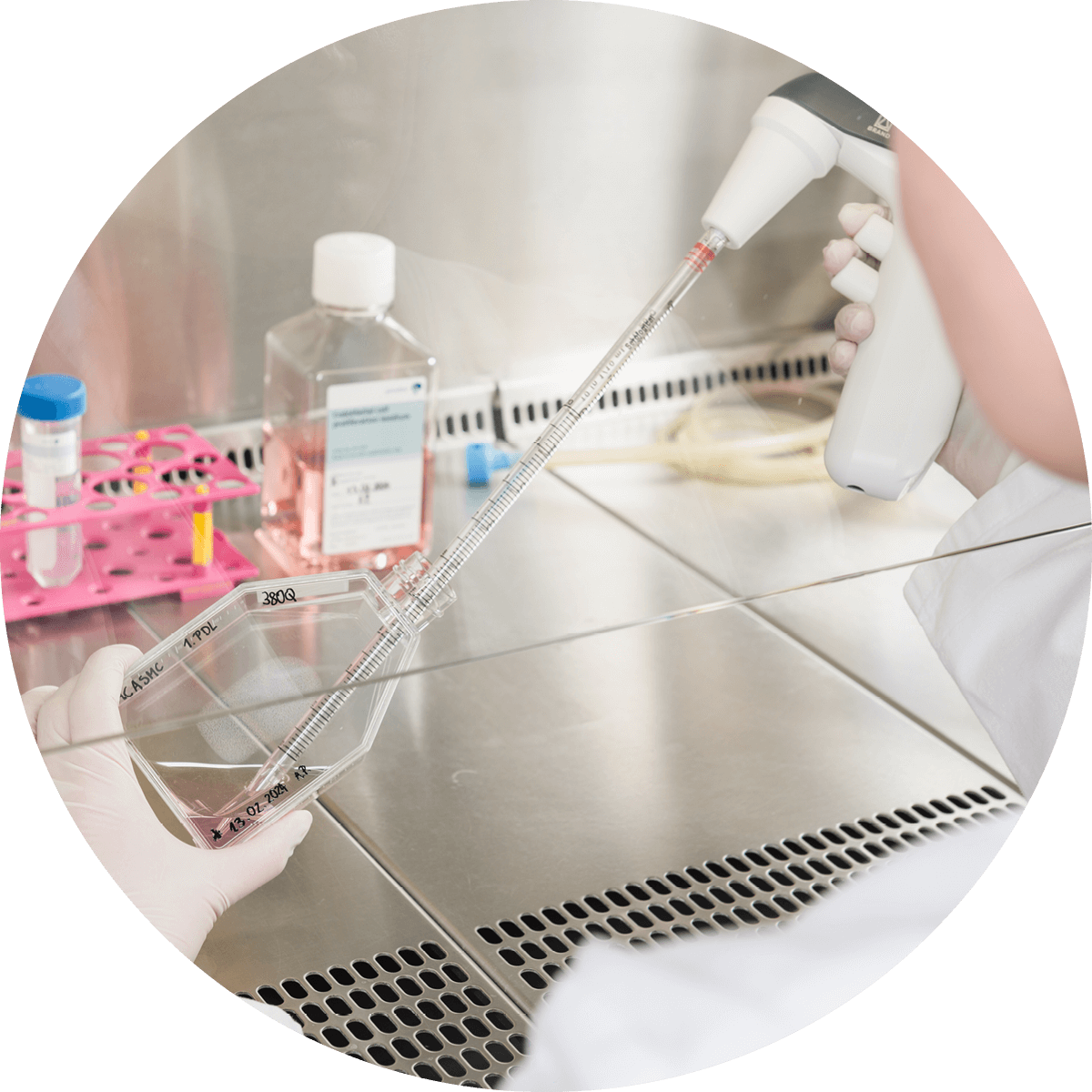

Revolutionizing Biomedical Research with Human-Derived ECM
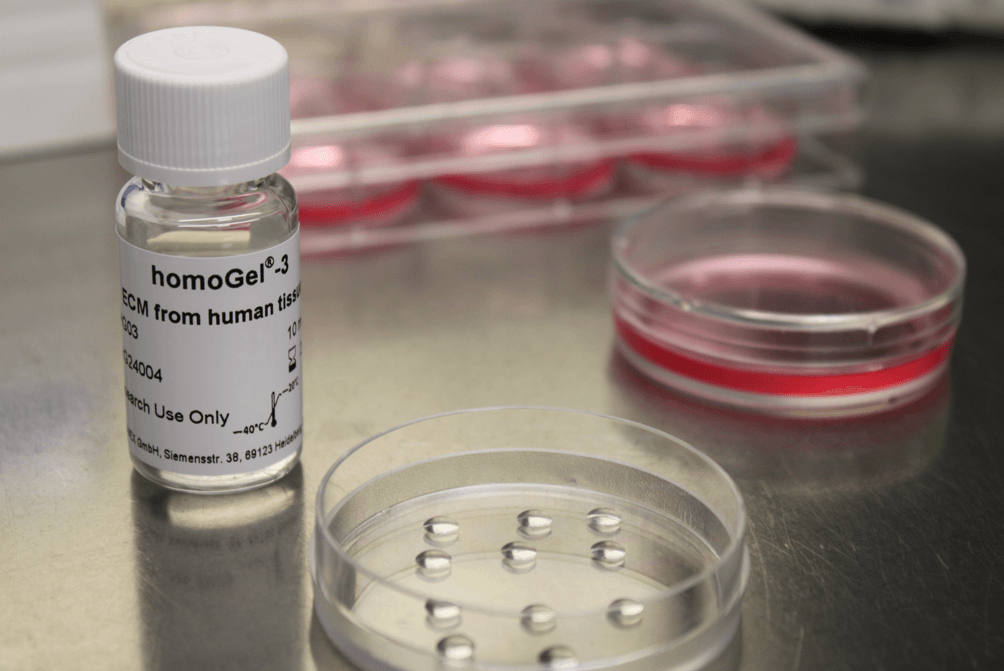
homoGel®is an innovative, native, human-derived extracellular matrix (ECM) that redefines standards in biomedical research and tissue engineering. Engineered to surpass the limitations of conventional animal-derived scaffolds, homoGel® offers superior biological relevance. Unlike synthetic hydrogels, which do not fully recapitulate interactions with human cells, and plant-based hydrogels, which are predominantly composed of polysaccharides like cellulose, homoGel® provides a highly interactive and authentic environment for human cell studies. Its unmatched consistency, scientific accuracy, and ethical alignment make it the optimal choice for researchers focused on creating precise, human-specific tissue models for advanced applications.
Key Features and Benefits
- Consistency:
Produced under stringent quality control protocols, homoGel® ensures minimal batch-to-batch variability. This consistency is essential for reproducibility, which is a fundamental aspect of scientific research, providing validated results across different studies, laboratories, and applications. - Human Specificity:
Derived from native human tissues, homoGel® provides the exact biochemical and structural environment needed for human cells. This high level of biological relevance ensures that tissue models closely replicate the natural human tissue specific microenvironment, enhancing predictability and reliability in drug testing, disease modeling, and regenerative medicine. - User-Friendly:
With its transparent structure, optimized stiffness, and easy handling properties, homoGel® simplifies experimental procedures. It is designed for straightforward use, making it ideal for researchers at all levels of expertise, from seasoned professionals to those new to cell culture techniques. - Ethical Advancement:
As a xeno-free product, homoGel® supports humane and sustainable research practices by eliminating the need for animal-derived (non-human) materials. This ethical approach aligns with the global shift towards more humane research standards, enhancing the credibility and relevance of human-based scientific studies.
What are typical applications?
- Organoid Culture:
By providing a human-specific ECM environment, homoGel® promotes the growth, differentiation, and structural integrity of organoids. This results in more accurate disease models and enhanced platforms for drug discovery, toxicity testing, and personalized medicine. - Cancer Research:
With its biologically relevant matrix, homoGel® serves as a critical tool for investigating tumor-ECM interactions and transformations. It enables the development of realistic in vitro cancer models, aiding researchers in understanding tumor growth, metastasis, and the efficacy of new therapeutics. - Angiogenesis and Vascularization:
Unlike conventional matrices, homoGel® actively regulates and guides angiogenesis through its unique composition. By offering natural binding sites for endothelial cells and providing mechanical cues, homoGel® supports the formation of complex vascular networks essential for advanced tissue models. - Regenerative Medicine:
homoGel® is the scaffold for MSC and iPSC growth, serving as a cornerstone in preclinical medical testing and the development of therapeutic models for regenerative medicine and tissue repair. - Tissue Engineering and Organ Reconstruction:
Designed for in vitro organ and tissue reconstruction, homoGel® provides a reliable matrix for stem cell bioprinting and structural tissue engineering. Its exceptional compatibility and support for cellular attachment and growth make it a powerful tool for developing next-generation biomedical solutions.